Why Can Two Applicants With the Same Salary Get Different Loan Offers?
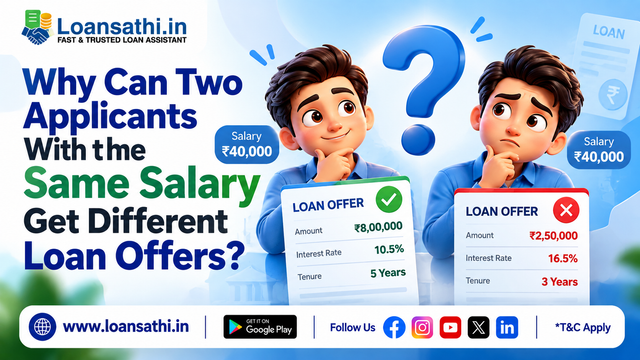
Two people earn ₹40,000 per month. Both have similar jobs and apply for the same type of loan. Yet one receives a higher eligible amount at a different interest rate, while the other gets a smaller offer or different repayment terms. Why does this happen? Because lenders do not assess an application on salary alone. They review the complete financial profile, repayment capacity and supporting information before making a decision.
Same Salary Does Not Mean Same Loan Offer
Your monthly earnings are only one part of a lender's assessment. Credit history, existing EMIs, income consistency, employer or business details, banking transactions and the requested loan tenure can all influence the final terms.
1. Income Details Can Tell Different Stories
Even when two applicants receive the same salary, the way their earnings are received and maintained may differ. One person may receive a regular monthly salary through a bank account, while another may have variable incentives, deductions or irregular credits.
Regular Salary Credits
Consistent monthly credits can help a lender understand the applicant's income pattern and assess repayment capacity.
Variable Earnings
Incentives, commissions, unpaid leave or changing monthly income may require additional review by the lender.
The bank statement and income documents help verify what the applicant actually receives. The lender may also consider job continuity, employer details and the stability of the income source. Requirements vary by loan type and institution.
2. Credit History and Repayment Behaviour
A credit report gives lenders information about previous and current borrowing. Two applicants with identical earnings can have different credit histories: one may have paid EMIs on time, while the other may have overdue accounts, settled loans or frequent recent credit applications.
Credit score is important, but it is not the only factor. Lenders may review repayment records, outstanding balances, credit-card utilisation and the number of recent enquiries. TransUnion CIBIL explains these factors in its credit-related FAQs.
Applicant A
Consistent repayments, manageable balances and a longer record of responsible credit use.
Repayment track recordApplicant B
Recent delays, high card balances or several active credit obligations that need assessment.
Different credit profile3. Existing EMIs Change Repayment Capacity
Consider two applicants earning ₹40,000 per month. One already pays ₹5,000 towards existing loans, while the other pays ₹15,000. Their gross salaries are equal, but the amount available for a new EMI is not.
Lenders assess income alongside monthly expenses, liabilities and other relevant details. The Reserve Bank of India's guidance on housing-loan eligibility also describes repayment capacity in terms of disposable income, expenses, liabilities and income stability. Actual assessment methods differ between lenders and loan products.
4. Employer, Work Profile and Banking Pattern
Employment information can also affect how an application is assessed. A salaried employee with stable work history may be evaluated differently from someone who recently changed jobs or receives a substantial part of their earnings through variable payments. For self-employed applicants, business continuity and the records available to verify income may be relevant.
Banking behaviour matters too. Frequent cheque or EMI returns, low account balances, unexplained transactions or irregular cash flows may lead to further checks. These details do not automatically decide the outcome, but they can form part of the lender's overall review.
5. Loan Amount and Tenure Also Matter
The amount requested and the repayment period can change the proposed EMI. A higher loan amount may increase the monthly obligation, while a longer tenure may reduce the EMI but increase the total interest paid over time. Lenders assess whether the proposed repayment structure fits the applicant's profile and their own credit policy.
Explore Why Offers May Differ
Select a situation for each applicant. The example keeps both salaries equal and shows how other details can change the assessment.
This is an educational example, not a credit score calculator, eligibility check or prediction of loan approval.
6. What Applicants Can Review Before Applying
A little preparation can make the application process clearer. Before submitting a request, review your credit report for incorrect entries, check current EMI commitments and keep income and bank records ready. Avoid sharing inaccurate details or applying repeatedly without understanding the lender's requirements.
Compare the full offer rather than focusing only on the approved amount. Check the interest rate, annual percentage or applicable charges, tenure, EMI, processing fees and repayment conditions. Read the lender's terms carefully before accepting.
How LoanSathi Helps You Explore Loan Options
LoanSathi.in is a loan assistance platform, not a direct lender. It works with a network of 150+ banks and NBFCs to help customers explore options based on their profiles. The process is designed to make the available terms clearer before an application is submitted.
Slot Booking: The customer books a service slot to begin the assistance process.
Document Collection: The team collects the relevant details and documents.
Profile Review: The information is checked and assessed to identify lenders whose requirements may align with the applicant's profile.
Offer Discussion: Available details such as loan amount, interest rate, tenure and lender name are shared with the customer.
Customer Confirmation: The application is submitted to the selected lender only after the customer confirms the offer.
Lender Decision: The bank or NBFC independently reviews the application and decides whether to approve and disburse the loan.
Explore available options: Personal Loan · Business Loan · Home Loan · All Loan Products.
Frequently Asked Questions
Can two people with the same salary get different interest rates?
Yes. Credit history, existing liabilities, income stability, loan amount and lender-specific policies can lead to different offers.
Does a high CIBIL score guarantee loan approval?
No. A score is one part of the assessment. The lender also considers other financial and application details before making its decision.
Can I compare offers before choosing a lender?
Yes. Review the amount, interest rate, tenure, EMI and applicable charges. Make sure you understand the terms before confirming an application.
Looking to Explore Loan Options?
Understand your profile and review available loan options with assistance from LoanSathi.
Explore Loan Products


Disclaimer: Loan offers, eligibility, interest rates, loan amounts and approval decisions depend on the respective bank or NBFC's assessment and policies. LoanSathi provides loan assistance and does not guarantee approval or disbursement. Customers should review all lender terms and applicable charges before proceeding.
↑ Back to Top