What Is a Secured Loan and How Is It Different From an Unsecured Loan?
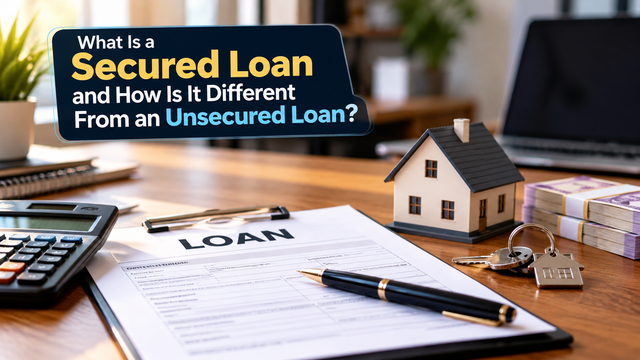
A simple guide to understanding loan types
A loan can be secured or unsecured depending on whether you provide an asset as collateral. Understanding this difference is important before choosing a borrowing option. It can affect the lender's risk assessment, the amount you may qualify for, the interest rate offered and what happens if repayments are not made. Let's understand both options with simple examples.
What is the main difference?
A secured loan is backed by an asset, such as property, a vehicle or gold. An unsecured loan does not require you to pledge an asset. Instead, the lender mainly evaluates your income, credit history, repayment capacity and other eligibility details.
Collateral is required
An asset is pledged as security for the borrowing.
No asset pledge
Approval depends on your financial profile and lender criteria.
What Is a Secured Loan?
A secured loan is a borrowing arrangement in which the customer provides an asset as collateral. This asset gives the lender additional security if the borrower fails to repay according to the loan agreement.
Common examples include home loans, loans against property, vehicle loans and gold loans. The lender may assess the value, ownership and condition of the asset before deciding the eligible amount. Your income and repayment capacity are also important.
Common examples
- Home Loan – the financed property acts as security.
- Vehicle Loan – the vehicle is generally hypothecated to the lender.
- Gold Loan – eligible gold ornaments are pledged.
- Loan Against Property – an eligible property is offered as collateral.
Secured borrowing may offer a larger amount or a more favourable interest rate than some unsecured options, but this is not guaranteed. The final terms depend on the lender, collateral value, credit profile and repayment capacity.
What Is an Unsecured Loan?
An unsecured loan does not require the borrower to pledge property, gold or another asset as collateral. Since the lender does not have a specific asset as security, it usually places greater emphasis on the applicant's credit history, income stability, existing obligations and ability to repay.
Common examples
- Personal Loan
- Many credit card borrowings
- Some short-term consumer loans
- Eligible unsecured business loans
These products can be useful when you need funds without pledging an asset. However, interest rates may be higher than secured alternatives, depending on your profile and the lender's assessment. Missing payments can still lead to collection action and a negative impact on your credit history.
Secured vs Unsecured Loan: Key Differences
| Factor | Secured Loan | Unsecured Loan |
|---|---|---|
| Collateral | Required | Not required |
| Risk to asset | Pledged asset may be at risk after default and due legal process | No specific pledged asset |
| Assessment | Profile + asset value | Profile + repayment capacity |
| Interest rate | May be lower in some cases | May be higher in some cases |
| Examples | Home, vehicle, gold loans | Personal loan, credit card borrowing |
The comparison is general. Actual terms, security arrangements and recovery procedures depend on the product, lender and signed agreement.
Which Loan Type May Suit Your Requirement?
Choose the option that best describes your situation to see which category you can explore. This is a general guide, not an eligibility or approval decision.
Step 1: Do you want to pledge an asset?
Select an option above to continue.
What Should You Check Before Applying?
Before choosing any borrowing option, review the annual interest rate, processing fees, repayment tenure, EMI, late-payment charges and foreclosure conditions. For secured products, understand the collateral valuation, ownership requirements and the consequences of default. Never pledge an asset without reading the agreement carefully.
Also check your credit report and existing monthly obligations. Applying to several lenders in a short period may result in multiple credit enquiries. Select a product that fits your actual requirement and repayment capacity rather than focusing only on the maximum amount offered.
How LoanSathi Helps You Explore Loan Options
LoanSathi.in is a loan assistance platform, not a direct lender. Through its network of 150+ banks and NBFCs, it helps customers explore lending options based on their profile.
Loan approval, amount, rate and disbursement are decided by the respective bank or NBFC after its assessment.
Explore Loan Products
Review the product categories below to understand which type may match your requirement.
Frequently Asked Questions
1. Is a secured loan always cheaper than an unsecured loan?
Not always. Secured products may offer lower rates in some cases, but pricing depends on the lender, asset, credit profile and other terms.
2. Can I get an unsecured loan without collateral?
Yes. Personal loans are a common example. However, lenders assess income, credit history, existing liabilities and other eligibility conditions.
3. What happens if I cannot repay a secured loan?
Default can lead to recovery action and, subject to the agreement and applicable law, the lender may enforce its security over the pledged asset.
4. Does a secured loan require a good credit score?
Credit history can still matter. Providing collateral does not automatically guarantee approval or remove the lender's credit assessment.
5. Which option should I choose?
Consider your funding need, available collateral, repayment capacity and the total cost. Compare suitable offers before deciding.
Explore loan options with LoanSathi
Understand available products and compare the terms shared by lending partners before choosing an offer.
Explore LoanSathi.in


